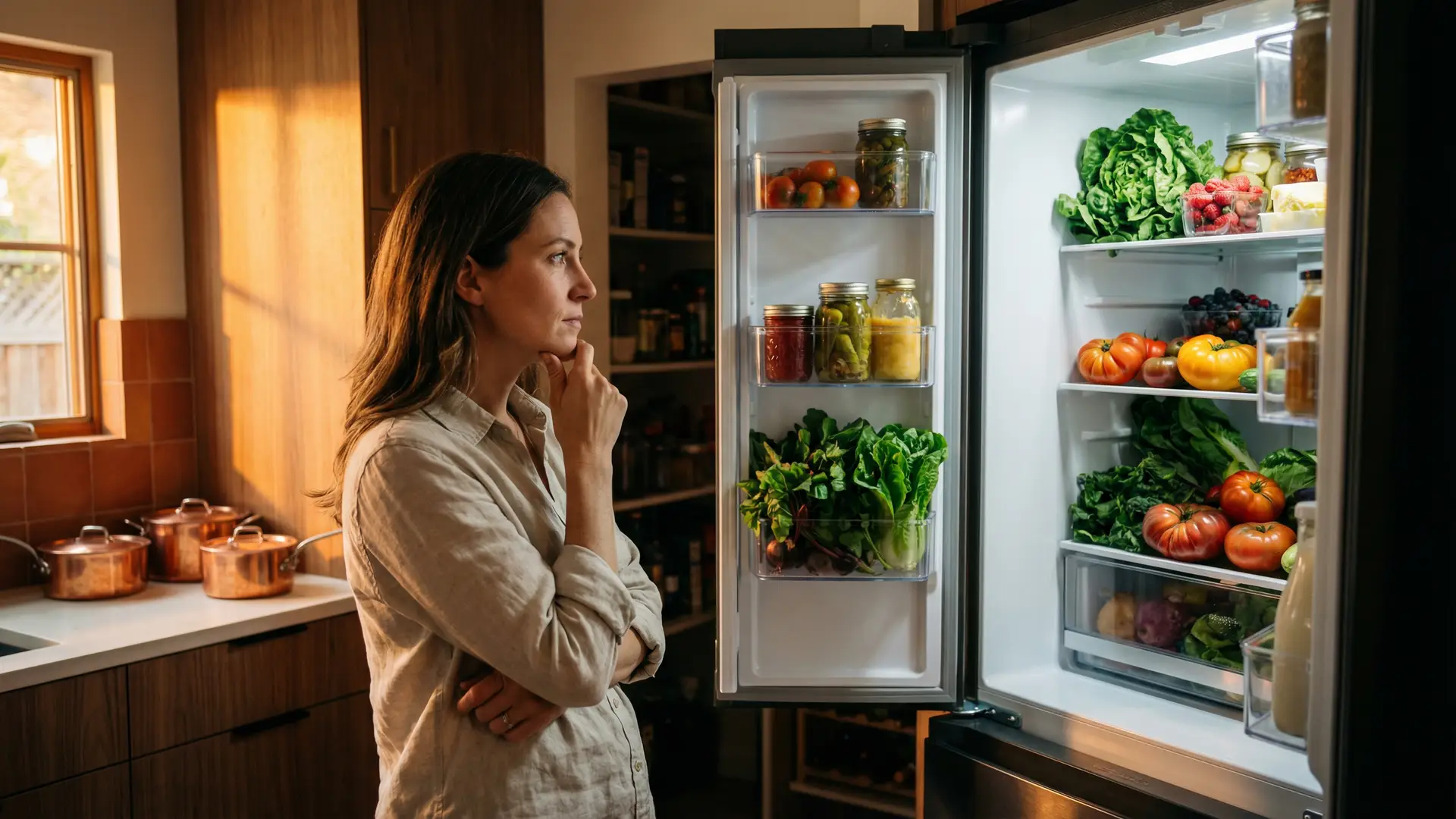

The Real Problem Is Not Recipes
Most people who say they have no idea what to cook for dinner have access to thousands of recipes. They have apps, cookbooks, and a search engine that returns millions of results for any ingredient combination. The problem is not a shortage of options — it is the opposite.
Decision fatigue is a well-documented psychological phenomenon: the more choices you face, the harder each individual decision becomes. When you open a recipe app at 5 PM with no plan, you are not just choosing a meal — you are filtering thousands of options against your family's preferences, your current fridge contents, your available time, and your energy level. That is an enormous cognitive task to perform in real time, every evening.
The solution is not more recipes. It is fewer decisions.
Why “Just Decide in the Moment” Always Fails
The “figure it out at dinnertime” approach has a structural problem: it requires your best decision-making at the moment when your cognitive resources are lowest. After a full day of work, school runs, and everything else that fills a family day, the mental bandwidth required to plan and execute a good dinner is simply not available.
This is why families default to the same eight meals on rotation, order takeout more than they intend to, and feel a persistent low-level guilt about not cooking more varied, nutritious food. It is not a motivation problem — it is a timing problem. The decision is being made at the wrong moment.
The System: Move the Decision to Sunday
The fix is simple in principle: make your dinner decisions on Sunday, when your cognitive resources are higher and the week's constraints are visible. A 15-minute planning session on Sunday eliminates seven individual 5 PM decisions — and replaces them with a shopping list that makes execution automatic.
Here is what a functional Sunday planning session looks like:
Step 1: Check the week's schedule (2 minutes)
Which evenings are busy? Which evenings do you have time to cook something more involved? A Tuesday with football practice needs a 20-minute dinner. A Friday with no commitments can handle something more ambitious.
Step 2: Choose five to seven meals (5 minutes)
You do not need to plan every meal from scratch every week. Start with a rotation of 15–20 meals your family reliably enjoys, and select from that rotation based on the week's schedule. Add one new meal per week if you want variety.
Step 3: Build the shopping list (5 minutes)
List the ingredients you need for the week's meals. Cross-reference with what you already have. The shopping list is the output of the planning session — it is what makes the rest of the week automatic.
Step 4: Do the shop (30–45 minutes, once)
One focused shopping trip, with a complete list, is faster and cheaper than multiple mid-week trips driven by reactive dinner decisions.
Building Your Permanent Rotation
The most important asset in a functional dinner system is a personal rotation: a set of 15–25 meals that your family reliably enjoys, that you can cook with confidence, and that cover a range of cooking times and complexity levels.
Building this rotation takes about four to six weeks of intentional cooking. Each week, note which meals worked well and which did not. After a month, you have a rotation that is genuinely personalised to your family — not a generic list from a recipe website.
How FamilyPlate Automates the System
FamilyPlate's dinner planning feature is built around this exact system. When you set up your family's profile — taste preferences, dietary restrictions, typical schedule — the AI generates a weekly plan that functions as your Sunday planning session, automated.
The plan is built from your family's rotation (meals they have rated positively) plus a controlled introduction of new meals based on their taste profiles. The shopping list is generated automatically from the plan. The swap feature handles mid-week changes without requiring a full rebuild.
The result is that the 5 PM decision — “what do I cook tonight?” — is already answered before you get home. The cognitive load of dinner planning is moved to a time when you have the bandwidth to handle it, and then automated so you do not have to handle it manually every week.
The Permanent Fix
If you have no idea what to cook for dinner tonight, the immediate answer is one of the 20 reliable meals in your rotation (or, if you do not have one yet, one of the options in our fast dinner ideas list).
The permanent fix is building a system that means you never have to ask the question again. That system starts with a Sunday planning habit and is most effectively maintained with a tool that automates the planning, the shopping list, and the weekly adaptation.