The Blank Canvas Problem
The hardest part of meal planning is not the cooking; it is the deciding. Staring at a blank weekly calendar and trying to come up with seven different meals is exhausting. This is known as decision fatigue, and it is why so many meal plans fail before they even begin.
Every decision you make depletes your mental energy. By the time you get to “what should I make for dinner on Thursday?” at the end of a long day, your brain has nothing left. The result is takeout, cereal for dinner, or the same pasta you made on Monday.
If you struggle with the blank canvas, theme nights are the solution. By assigning a broad category to each day, you narrow your choices dramatically and give your family something to look forward to.
Theme Nights vs. No Structure
Theme nights provide structure without being overly rigid. It is a framework, not a prison. Here is what the difference looks like in practice:
Without Themes
× Infinite recipe possibilities
× Overwhelming decision fatigue
× Kids ask “what's for dinner?” constantly
× Uneven variety (pasta 4 nights in a row)
× Planning takes an hour every Sunday
× Family has no dinner anticipation
With Themes
✓ Narrowed, easy choices within a category
✓ Zero decision fatigue
✓ Kids know what to expect and look forward to it
✓ Built-in dietary variety across the week
✓ Planning takes 5 minutes
✓ Family has a dinner ritual to enjoy
The Classic 5-Night Theme Rotation
You do not need to invent a new system. The classic five-night rotation has been proven in thousands of families. Here is the most popular version:
Meatless Monday
A vegetarian meal to start the week light. Pasta, veggie curry, bean tacos, or a hearty soup. Great for the budget and the planet.
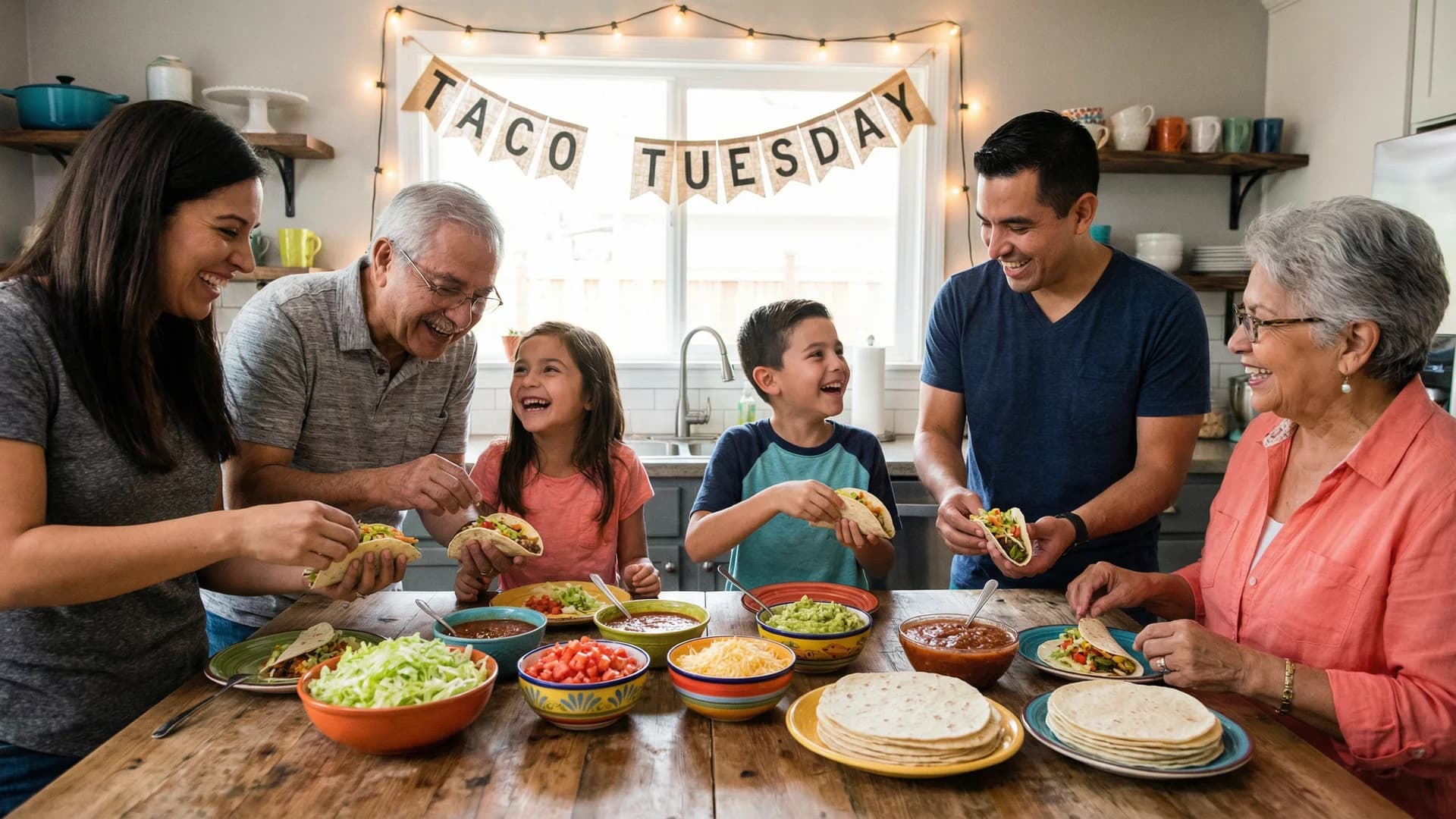
Taco Tuesday
Mexican-inspired night. Does not have to be tacos — fajitas, burrito bowls, quesadillas, or nachos all count. The theme is broad.
Pasta Wednesday
Italian night. Spaghetti bolognese, pesto pasta, lasagne, or a creamy carbonara. Quick, filling, and universally loved by kids.
Leftover Thursday
No cooking required. Use up everything from earlier in the week. This is the most underrated night — it saves money and reduces food waste.
Pizza Friday
Homemade or shop-bought, pizza is the perfect end-of-week celebration. Let the kids choose their toppings for a fun family activity.
A Sample Theme Night Week in Practice
Here is what the classic rotation looks like with specific meals filled in. Notice how the variety is built in automatically — you get vegetarian, Mexican, Italian, and two flexible nights without any extra planning effort:
Meatless
Butternut Squash & Chickpea Curry
30 min
Mexican
Chicken Fajitas with Peppers & Onions
25 min
Italian
Spaghetti Bolognese
35 min
Leftovers
Leftover Bolognese on Jacket Potato
5 min
Pizza
Build-Your-Own Homemade Pizza
30 min
Free Choice
Grilled Salmon with New Potatoes
25 min
Roast
Roast Chicken with All the Trimmings
90 min
A full week with built-in variety: 1 vegetarian, 1 Mexican, 1 Italian, 1 leftover night, 1 pizza, and 2 flexible weekend meals.
Want variety without the effort?
FamilyPlate’s AI automatically ensures your weekly plan has a balanced mix of cuisines and proteins.
Try FamilyPlate free →Real Stories: The Power of Predictability
“My kids stopped complaining about dinner”
Before
Every night was a battle. I would make something, and my kids would immediately ask why we could not have tacos instead. The unpredictability made them resistant to everything.
After
We implemented theme nights. Now they know Tuesday is Taco night and Friday is Pizza night. Because they know their favourites are coming, they are much more willing to eat the chicken and vegetables on Wednesday.
“Predictability gave my kids comfort, and it gave me my sanity back. Dinner is actually something we look forward to now.”
The Impact of Theme Nights on Family Dinner
| Metric | Without Theme Nights | With Theme Nights |
|---|---|---|
| Weekly planning time | 45–60 min | ↓ 5–10 min |
| Dinner complaints from kids | Frequent | ↓ Rare |
| Cuisine variety per week | Random / uneven | ↑ Structured variety |
| Food waste (unused ingredients) | High | ↓ Low (planned shopping) |
| Takeout frequency | 2–3 times/week | ↓ 0–1 times/week |
| Family dinner enjoyment | Variable | ↑ Consistently high |
Based on FamilyPlate user data and decision fatigue research from Columbia Business School.
How FamilyPlate Automates Your Rotation
While theme nights make manual planning easier, FamilyPlate makes it effortless. Our AI meal planner understands the concept of meal rotation and variety. It automatically ensures your weekly plan has a balanced mix of cuisines, proteins, and cooking methods — giving you the benefits of theme nights without having to think about it.
And if a suggested meal does not fit your mood on a given night, you can use the instant meal swap feature to find a perfect alternative in seconds. The swap respects your theme — so if you swap a Mexican meal, you will get another Mexican option, not a random pasta dish.
The automatic grocery list then builds your shopping list from the confirmed plan, organised by aisle. You buy exactly what you need, nothing more.
Frequently Asked Questions
Do I have to stick to the themes every single week?
Not at all. Themes are meant to help you, not restrict you. If you have a busy Tuesday and cannot do tacos, swap it for a slow cooker meal. The goal is to reduce decision fatigue, not create rigid rules. Flexibility is built into the system.
What are some unique theme night ideas beyond the classics?
Try "Sheet Pan Saturday" (everything cooks on one pan), "Breakfast for Dinner", "Soup and Sandwich Night", "Slow Cooker Sunday", or "Global Explorer" where you try a cuisine from a different country each week.
How do I handle picky eaters with theme nights?
Keep the themes broad enough that there is always something the picky eater will accept. "Taco Tuesday" can include plain rice and beans alongside the tacos. The theme gives structure; the specific meal within the theme can be adapted.
Can theme nights work for families with dietary restrictions?
Absolutely. "Meatless Monday" is naturally great for vegetarians. "Taco Tuesday" is easy to make gluten-free or dairy-free. The themes are flexible enough to accommodate almost any dietary need.
The Bottom Line: Structure Is Freedom
The paradox of theme nights is that adding structure actually creates more freedom. When you know Tuesday is Taco night, you are not spending mental energy on Tuesday’s dinner. That energy goes back to you — for your work, your family, your evening.
Dinner does not have to be a daily negotiation. It can be a ritual. Something your family looks forward to, something that brings you together, something that runs on autopilot. Try FamilyPlate free — your rotation is ready in seconds.
Ready for Stress-Free Dinners?
Let FamilyPlate build a perfectly balanced meal plan for your family in seconds.
No credit card required. Setup takes 2 minutes.
Get Started Free →