How to Organise Your Grocery List So You Never Forget an Ingredient Again
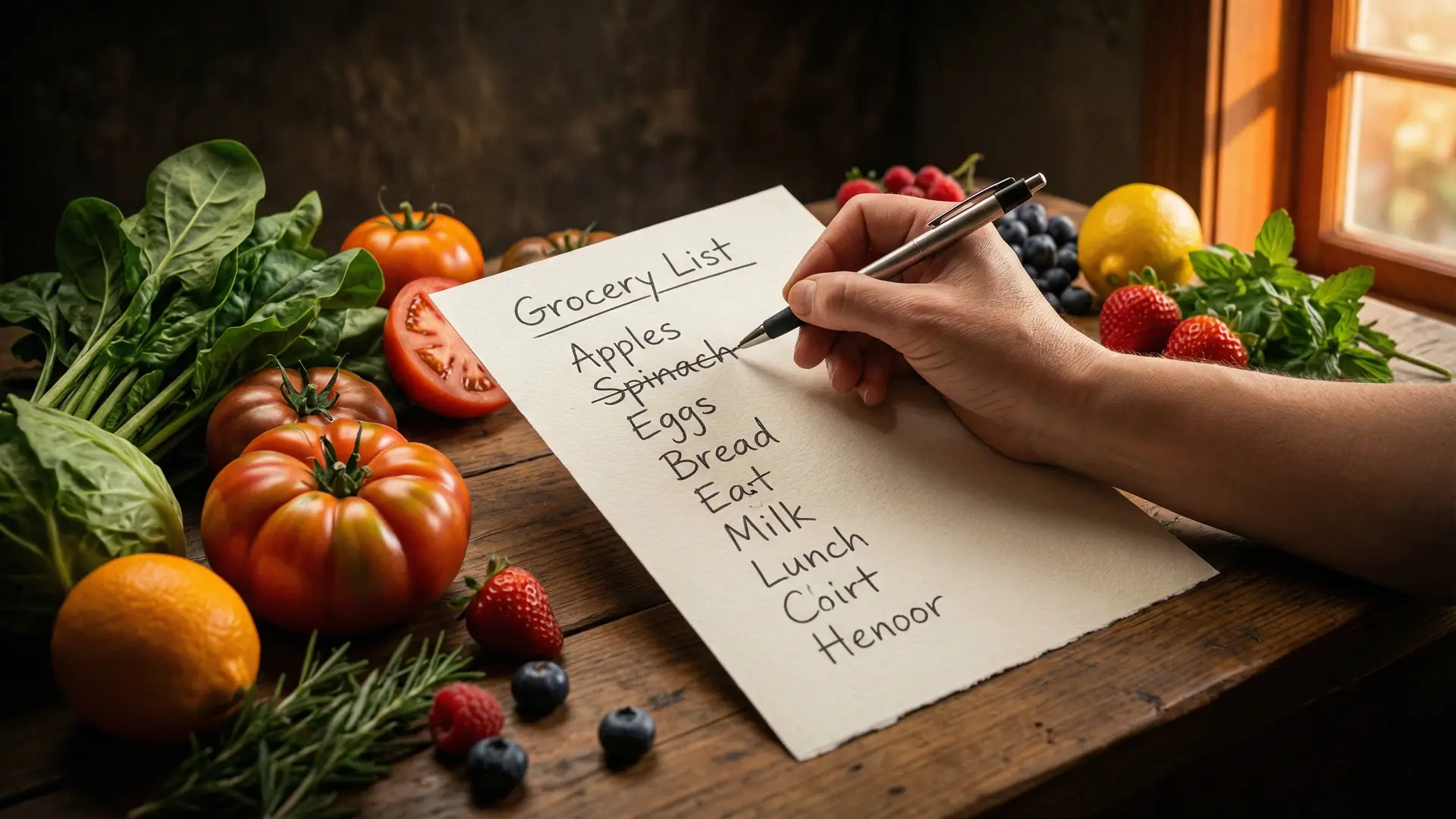
A disorganised grocery list is not just annoying — it costs you time, money, and mental energy. You backtrack across the supermarket, forget items that were buried in the middle of the list, and arrive home to discover you bought everything except the one ingredient you actually needed. Here is how to build a grocery list that works — and how to stop building it manually altogether.
The Anatomy of a Good Grocery List
A well-organised grocery list has three properties: it is complete (nothing missing), it is aggregated (no duplicates), and it is categorised (organised by supermarket section). Most handwritten lists fail on all three counts.
Completeness
The most common cause of an incomplete grocery list is the assumption that you already have something. You think you have olive oil, so you do not write it down. You arrive home and find an empty bottle. The solution is to build your list from your meal plan, not from memory. If a recipe calls for olive oil, it goes on the list — regardless of whether you think you have some.
Aggregation
If your meal plan includes three recipes that each use garlic, your list should have one entry for garlic with the total quantity — not three separate entries. Manual aggregation requires you to read every recipe, note every instance of a shared ingredient, and add up the quantities. This is tedious and error-prone. An automatic grocery list does this instantly.
Categorisation
Organising your list by supermarket section — produce, dairy, meat, bakery, dry goods, frozen, cleaning — means you move through the store in a logical sequence. You never need to backtrack. The time saving is typically 15 to 20 minutes per shop, which adds up to over 13 hours per year.
The Standard Supermarket Category Order
Most supermarkets follow a broadly similar layout. Organising your list in this order minimises backtracking:
- Produce (fruit and vegetables)
- Bakery and bread
- Dairy and eggs
- Meat and fish
- Deli and prepared foods
- Dry goods (pasta, rice, tinned goods, cereals)
- Condiments and sauces
- Frozen
- Cleaning and household
Why Manual Organisation Fails Over Time
Even if you build a well-organised list template, maintaining it manually is unsustainable. Every week, the meals change. Every week, the ingredients change. Every week, you need to re-categorise from scratch. The discipline required to maintain a manually organised, aggregated, complete grocery list every week for years is more than most families can sustain — which is why most families eventually stop trying.
The solution is to stop building the list manually. FamilyPlate's automatic grocery list generates a complete, aggregated, categorised list from your weekly meal plan in seconds. Every time you change a meal, the list updates instantly. You never write a grocery list by hand again.
Get a perfectly organised grocery list automatically
FamilyPlate builds your weekly plan and shopping list together. Free to start.
Get Started Free →