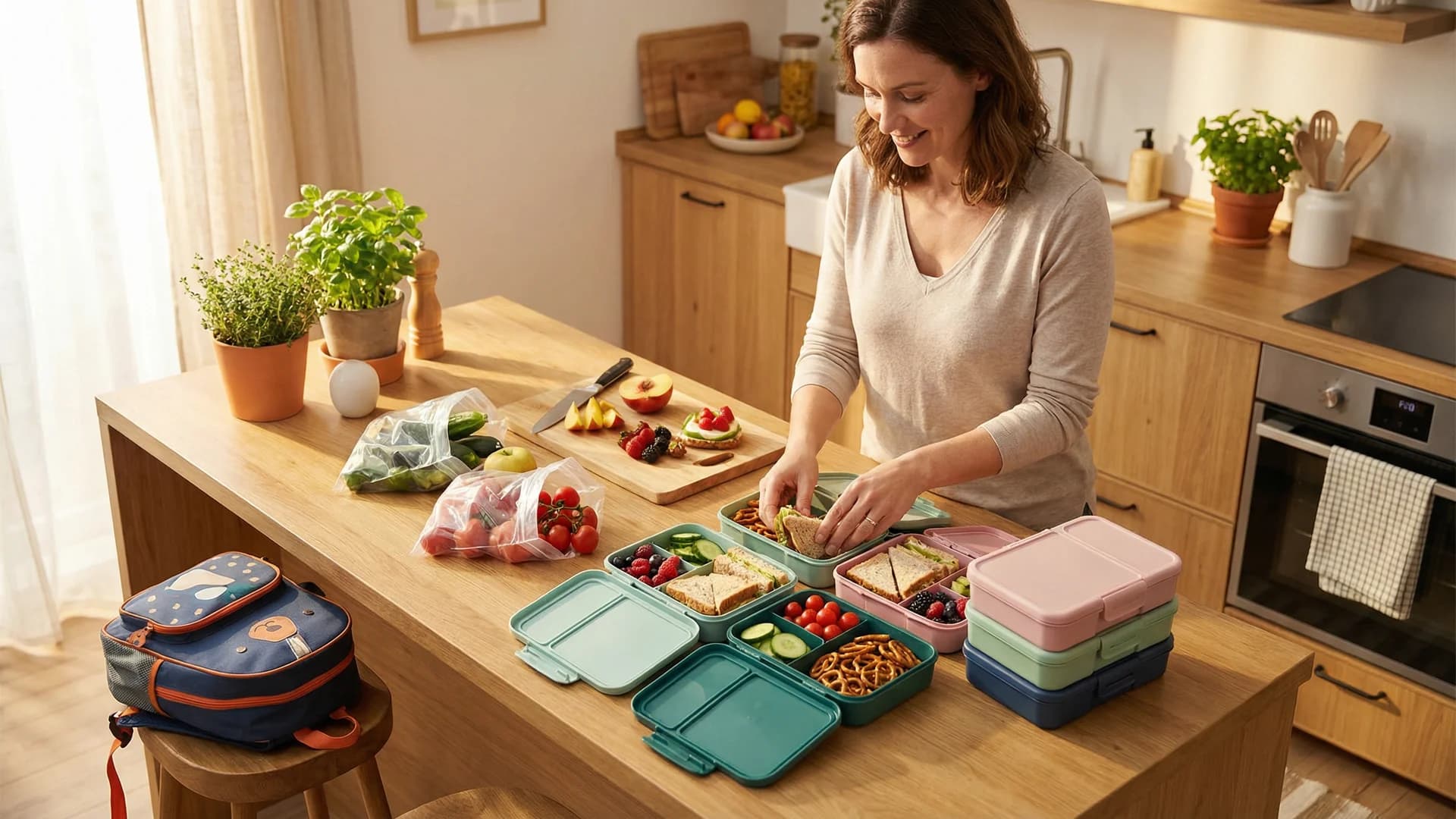

Why Most Families Already “Meal Prep” — Just Badly
Here is the truth about family meal prep: most families are already doing it. They are just doing it in the most inefficient way possible — cooking from scratch every single night, buying ingredients for one meal at a time, and repeating the same decision-making process seven days a week.
The average family spends 45 minutes per weeknight on dinner — planning, shopping, cooking, and cleaning. That is five hours a week. A single two-hour Sunday session can reduce that to under 45 minutes for the entire week. The maths are straightforward; the execution is what this guide covers.
The Beginner's Mistake: Trying to Prep Everything
The most common reason families abandon meal prep after one attempt is that they try to do too much. They prep full meals, store them in containers, and then find that reheated dinners taste flat by Wednesday. The solution is not to prep full meals — it is to prep components.
❌ What Beginners Do Wrong
- Prep complete assembled meals
- Cook everything on Sunday
- No plan for which meals use which components
- Forget to check what's already in the fridge
✅ The Component Method
- Prep proteins, grains, and veg separately
- Assemble fresh each night (5–10 min)
- Plan which components serve multiple meals
- Generate grocery list from the meal plan first
The 5-Step Sunday Prep Session (Under 2 Hours)
The following five steps cover a complete Sunday prep session for a family of four. Each step has a time estimate. The total is 120 minutes — but most of that time is passive (oven time, rice cooker time) so the active effort is closer to 60 minutes.
FamilyPlate AI · Generates your prep list automatically
Start Prepping →Live demo · tap each step to check it off your prep list
The Weekly Dinner Payoff
After a two-hour Sunday session, every weeknight dinner becomes a 10-minute assembly job. The components are in the fridge, the sauces are made, and the only decision is which format to use — stir-fry, bowl, wrap, or soup. This is the core promise of family meal planning: front-load the effort so the week runs on autopilot.
| Without Prep | With Sunday Prep |
|---|---|
| 45 min/night × 5 nights = 225 min | 2 hr Sunday + 10 min/night × 5 = 170 min |
| Decision fatigue every evening | Plan decided on Sunday |
| Frequent mid-week grocery runs | One weekly shop from automated list |
| Inconsistent nutrition | Balanced components prepped in advance |
| Higher food waste | Components used across multiple meals |
How FamilyPlate Automates the Planning Half
The hardest part of meal prep is not the cooking — it is the planning. Deciding which five meals to make, identifying which ingredients they share, and building a grocery list that accounts for what you already have. This is exactly what FamilyPlate's AI meal planner does automatically.
When you set up your family's taste profile and dietary preferences, FamilyPlate generates a weekly plan that maximises ingredient overlap — so your Sunday prep session is as efficient as possible. The automated grocery list then consolidates all ingredients across the five meals, removes duplicates, and organises everything by aisle. You arrive at the supermarket with a complete, organised list and zero guesswork.
After your first Sunday prep session, use the family voting feature to let every family member rate the meals. The system learns which formats and proteins your family prefers and adjusts future plans accordingly — so each week gets slightly better than the last.
Your First Sunday Prep: A Simple Starting Point
For your very first session, keep it simple: one protein (baked chicken thighs), one grain (rice), one roasted vegetable (broccoli and sweet potato), and two sauces (a simple tomato sauce and a soy-ginger glaze). From these five components, you can build a chicken rice bowl, a stir-fry, a wrap, a soup, and a pasta dish. That is five dinners from one 90-minute prep session.
Use the checklist in the demo above to track your progress through the prep session. Once you have completed your first Sunday, the habit becomes self-reinforcing — the week runs so much more smoothly that you will not want to go back.