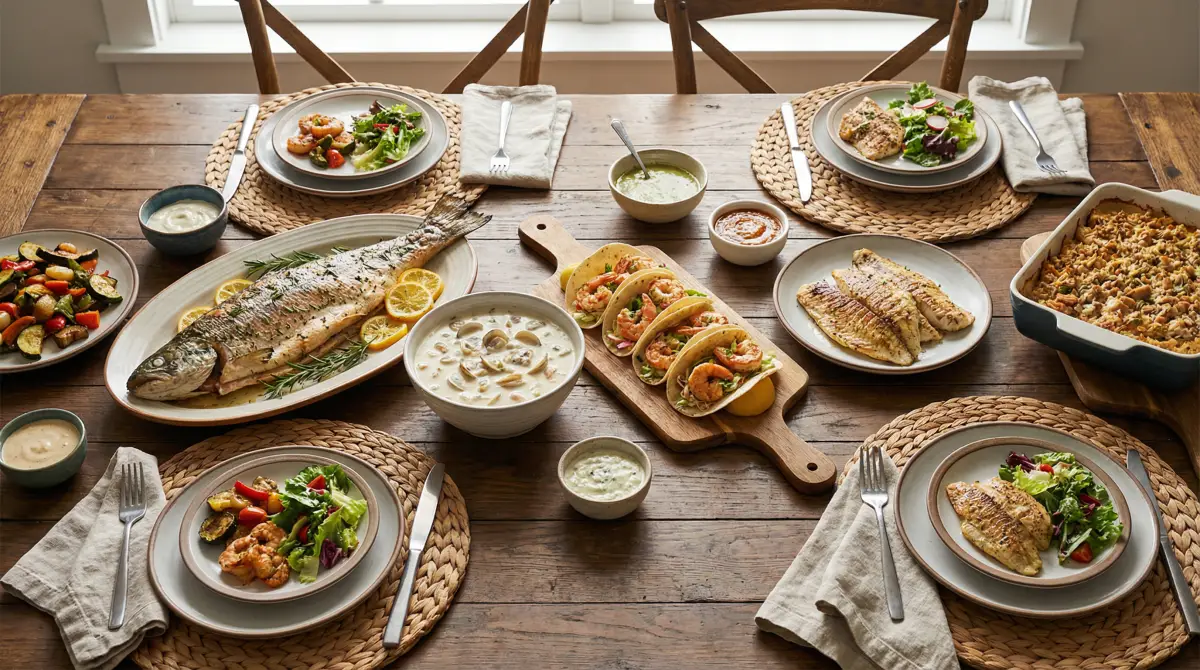
Pescatarian Meal Plan
for Families
Delicious, family-friendly Pescatarian meals that everyone will eat — even the non-Pescatarian members.
Create My Pescatarian Meal Plan →Trusted by 12,000+ families · No credit card required
A pescatarian meal plan is one of the most nutritionally balanced and family-friendly dietary approaches available. By including fish and seafood alongside a plant-rich diet, pescatarian families benefit from the omega-3 fatty acids found in oily fish, the complete proteins in eggs and dairy, and the fibre and micronutrients from vegetables, legumes, and whole grains. Unlike fully plant-based diets, pescatarian eating is flexible enough to satisfy children who still want familiar proteins on their plate — fish fingers, tuna pasta, and prawn stir-fry are all naturally kid-friendly. The challenge most families face is not the diet itself, but the planning: how do you serve fish 2–3 times a week without falling into a boring rotation of salmon and chips? A structured pescatarian meal plan solves this by rotating between oily fish (salmon, mackerel, sardines), white fish (cod, tilapia, haddock), shellfish (prawns, mussels), and vegetarian meals (egg-based dishes, bean curries, pasta) to ensure variety, nutrition, and budget balance across the week. FamilyPlate's AI builds this rotation automatically, adapting to your family's taste preferences, budget, and the number of people at the table — so you never have to think about what to cook next.
Fish Fatigue & Kid Resistance
The #1 reason families struggle with Pescatarian food at home — and how FamilyPlate solves it.
The Problem
Fish is healthy, but eating it every day can get expensive and boring. Plus, many kids are wary of 'fishy' tastes. Finding enough variety without resorting to fish sticks every night — while keeping the family happy — is the real challenge of pescatarian meal planning.
The FamilyPlate Solution
FamilyPlate generates creative, tasty Pescatarian meal plans that the whole family can enjoy together. No more short-order cooking.
Example Weekly Pescatarian Meal Plan
A real week your family could be eating — balanced between quick weekday meals and relaxed weekend cooking.
This structure balances fast weekday cooking with more relaxed weekend meals — making meal planning sustainable for the whole family.
Benefits of Pescatarian Meal Planning for Families
Rich in Omega-3 Fatty Acids for Brain Health
Oily fish like salmon, mackerel, and sardines are among the richest natural sources of DHA and EPA omega-3 fatty acids, which are critical for brain development in children and cognitive function in adults. A pescatarian meal plan that includes oily fish 2–3 times per week delivers these essential fats that are difficult to obtain from a purely plant-based diet.
More Sustainable Than a Meat-Heavy Diet
Pescatarian eating has a significantly lower carbon footprint than diets centred on red meat and poultry. By replacing beef and pork with fish, eggs, and plant proteins, families reduce their environmental impact while still enjoying satisfying, protein-rich meals. For families who want to eat more sustainably without going fully vegan, pescatarian is a practical middle ground.
Naturally Kid-Friendly Formats
Fish tacos, tuna pasta, prawn stir-fry, and fish pie are all dishes children already know and enjoy. Unlike some plant-based proteins that children find unfamiliar, fish integrates naturally into formats kids love — wraps, pasta, rice bowls, and pies — making the transition to a pescatarian diet easier for families with picky eaters.
Budget-Flexible Across the Week
A well-planned pescatarian week is not expensive. Canned tuna, frozen white fish fillets, and eggs are among the most affordable protein sources available. Fresh salmon and prawns can be reserved for 1–2 meals per week, while the remaining days use budget-friendly vegetarian meals — lentil soup, egg fried rice, bean tacos — to keep the weekly food bill manageable.
Supports Heart Health for the Whole Family
Pescatarian diets are consistently associated with lower rates of cardiovascular disease compared to meat-heavy diets. The combination of omega-3 fatty acids from fish, fibre from legumes and vegetables, and healthy fats from olive oil and avocado creates a dietary pattern that supports heart health for adults while providing the nutrients growing children need.
5 Tips for Pescatarian Family Meal Planning
Rotate Between Oily Fish, White Fish, and Shellfish
Avoid fish fatigue by varying the type of seafood across the week. Oily fish (salmon, mackerel) on Monday, white fish (cod, tilapia) on Wednesday, and prawns or mussels on Friday gives your family three completely different flavour profiles and textures — and ensures a broad range of nutrients.
Use Canned and Frozen Fish to Control Costs
Fresh fish is expensive. Canned tuna, canned salmon, and frozen white fish fillets are nutritionally equivalent to fresh and cost a fraction of the price. Keep a stock of these in your pantry and freezer so you can always make a quick pescatarian meal without a special shopping trip.
Fill Non-Fish Days with Egg and Legume Meals
A pescatarian diet does not mean fish every day. Egg-based dishes (frittatas, shakshuka, omelettes), bean curries, lentil soups, and tofu stir-fries are all pescatarian and provide excellent protein without any seafood. Aim for 2–3 fish meals per week and fill the rest with vegetarian options.
Start Kids with Mild, Familiar Fish Preparations
Children who are new to fish often resist strongly flavoured varieties. Start with mild white fish in familiar formats — fish tacos with cheese and avocado, tuna pasta bake, or battered cod with chips — before introducing stronger flavours like salmon or mackerel. FamilyPlate tracks which fish dishes your children accept and builds on those preferences.
Batch-Cook Fish-Free Meals for Busy Weeknights
Fish is best cooked fresh and doesn't reheat well, making it less suitable for batch cooking. Plan your fish meals for evenings when you have time to cook, and batch-cook the vegetarian meals (curries, soups, pasta sauces) at the weekend for the busiest nights of the week.
More Than Just a Diet
FamilyPlate builds your entire family food system around your dietary needs.
Family Voting
Stop guessing what they want. Let everyone vote on the weekly menu.
Smart Grocery List
Ingredients from your plan are automatically organised by aisle.
Recipe Database
Browse hundreds of family-friendly recipes filtered by cuisine, diet, and meal type.
Meal Planning with AI
Let AI build your weekly menu in seconds — personalised for your family's tastes.
Meal Swap
Don't like a meal? Swap it instantly for a better match — without breaking your weekly plan.
AI Taste Profiles
FamilyPlate learns what your family actually enjoys and turns it into smarter weekly meal plans.
Ready to Plan Your Pescatarian Week?
Let FamilyPlate build you a full weekly plan your family will actually follow.
Start Planning for Free →Pescatarian Meal Planning as a Family Activity
Pescatarian meal planning is particularly well-suited to families because it offers the flexibility to satisfy different preferences at the same table. Children who are reluctant to eat fish can be served the vegetarian component of a meal (rice, pasta, vegetables) while adults enjoy the fish element, without needing to cook two separate dinners. As children grow more adventurous, FamilyPlate's AI gradually introduces new fish varieties and preparations based on their evolving preferences. The diet also aligns well with school lunch requirements, as tuna sandwiches, egg salad, and cheese and vegetable wraps are all naturally pescatarian and widely accepted by children.
Frequently Asked Questions
Everything you need to know before getting started.
Is a pescatarian meal plan healthy for children?
Yes — pescatarian diets are widely considered healthy for children when planned correctly. Fish provides omega-3 fatty acids essential for brain development, while eggs and dairy supply calcium and vitamin D. FamilyPlate ensures your pescatarian week is nutritionally balanced, with a mix of oily fish (salmon, mackerel), white fish (cod, tilapia), and plant-based protein (eggs, legumes, tofu) so children get all the nutrients they need.
How do I get my kids to eat fish?
The key is starting with mild, familiar preparations. Battered or breaded white fish, fish tacos with cheese and avocado, and creamy tuna pasta are all entry points that don't taste strongly 'fishy'. FamilyPlate's AI learns which fish dishes your children accept and prioritises those formats while gradually introducing new varieties over time.
How many times a week should a pescatarian family eat fish?
Most nutritionists recommend 2–3 servings of fish per week for adults and children. A well-structured pescatarian meal plan fills the remaining days with vegetarian meals — pasta, egg dishes, bean-based curries, and grain bowls — so the diet stays varied and affordable without relying on fish every night.
Is this strictly for Pescatarian families?
It's perfect for mixed families too! Our recipes are designed to be delicious for everyone, whether they strictly follow a Pescatarian diet or not.
Does the shopping list handle Pescatarian ingredients?
Yes, our automatic grocery list specifically identifies Pescatarian substitutes and ingredients, making your shopping trip much faster.
Can I exclude specific ingredients?
Yes, beyond just being Pescatarian, you can exclude specific allergens or ingredients you just don't like.
Start Your Pescatarian Meal Plan Today
Join thousands of families who eat better, waste less, and stress less — every single week.
Get Started Free →