The Calorie Number Problem
Calorie information is more widely available than ever — and less useful than ever for families. The number on a nutrition label tells you the energy content of a standardised serving, under controlled conditions. It does not tell you how much your child will eat, how the meal fits into the rest of the day, or whether the calories are coming from protein, fat, or refined carbohydrates.
For families, obsessing over per-meal calorie counts creates more problems than it solves. It creates anxiety around food, it models an unhealthy relationship with eating for children, and it ignores the variables that actually determine whether a family is eating well.
What the Numbers Actually Mean
Before deciding what to ignore, it helps to understand what calorie ranges actually look like for different family members. These are approximate daily targets based on age, sex, and moderate activity levels:
| Family Member | Daily Calories | Dinner (30–35%) |
|---|---|---|
| Child age 4–6 | 1,200–1,400 kcal | 360–490 kcal |
| Child age 7–10 | 1,400–1,800 kcal | 420–630 kcal |
| Child age 11–14 | 1,800–2,200 kcal | 540–770 kcal |
| Teen age 15–18 | 2,000–2,800 kcal | 600–980 kcal |
| Adult woman (moderate activity) | 1,800–2,200 kcal | 540–770 kcal |
| Adult man (moderate activity) | 2,200–2,800 kcal | 660–980 kcal |
The range is wide. A family of four has dinner calorie needs spanning from 360 kcal (a young child) to 980 kcal (a teenage boy or active adult man). A single family dinner cannot optimise for all of these simultaneously — and it does not need to.
What to Actually Pay Attention To
Protein density, not calorie count
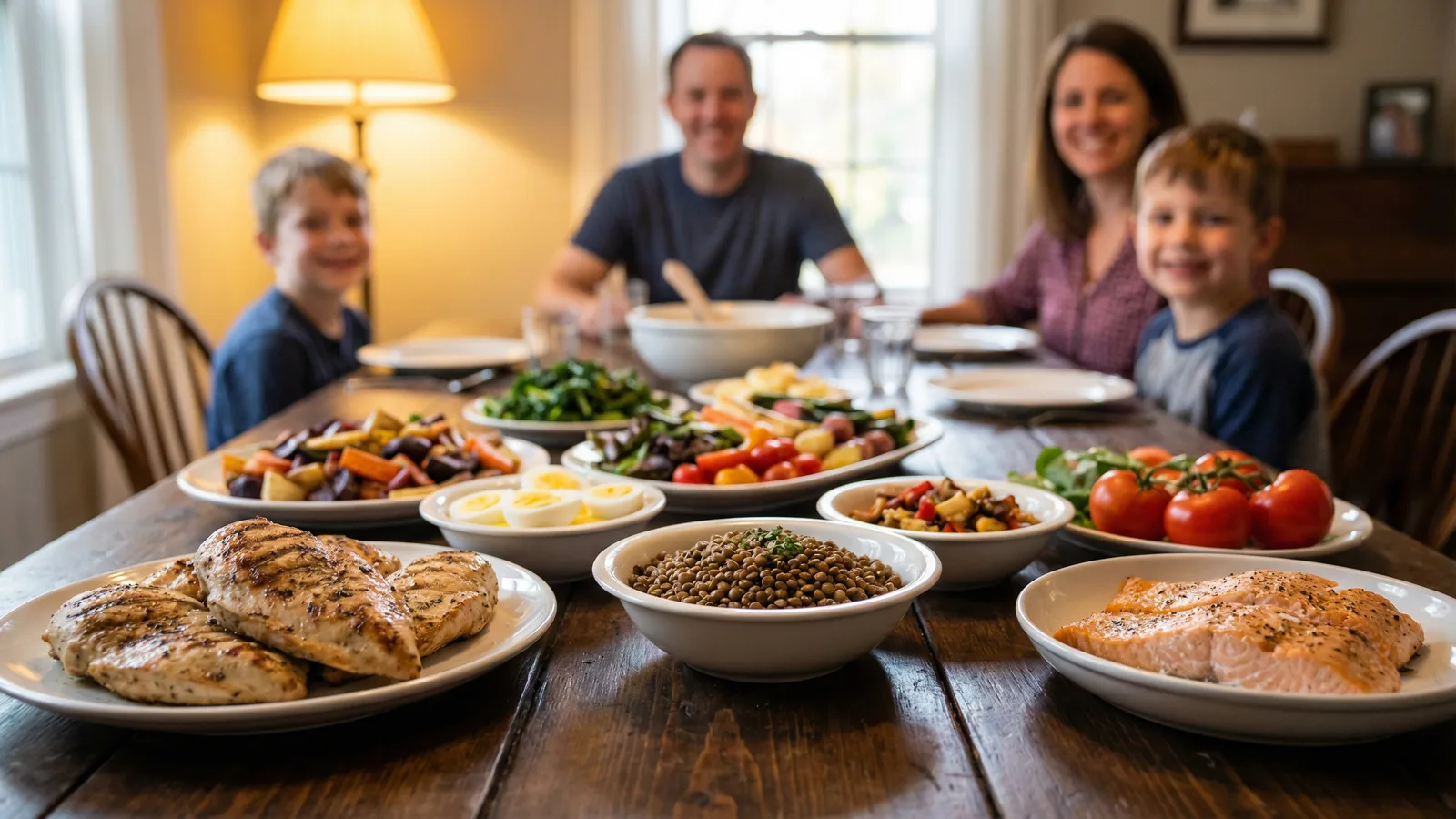
A 500-calorie dinner of pasta with cream sauce and a 500-calorie dinner of chicken with roasted vegetables have the same calorie count and completely different nutritional profiles. The chicken dinner provides roughly 35–40g of protein; the pasta dinner provides 12–15g. For a family trying to maintain energy levels and support children's growth, protein density is far more useful than calorie count.
Vegetable presence, not vegetable weight
You do not need to weigh your vegetables. You need to ensure they are present in most meals. A rough rule: at least one-third of the plate should be vegetables at dinner. This is a visual check, not a measurement.
Meal frequency patterns, not daily totals
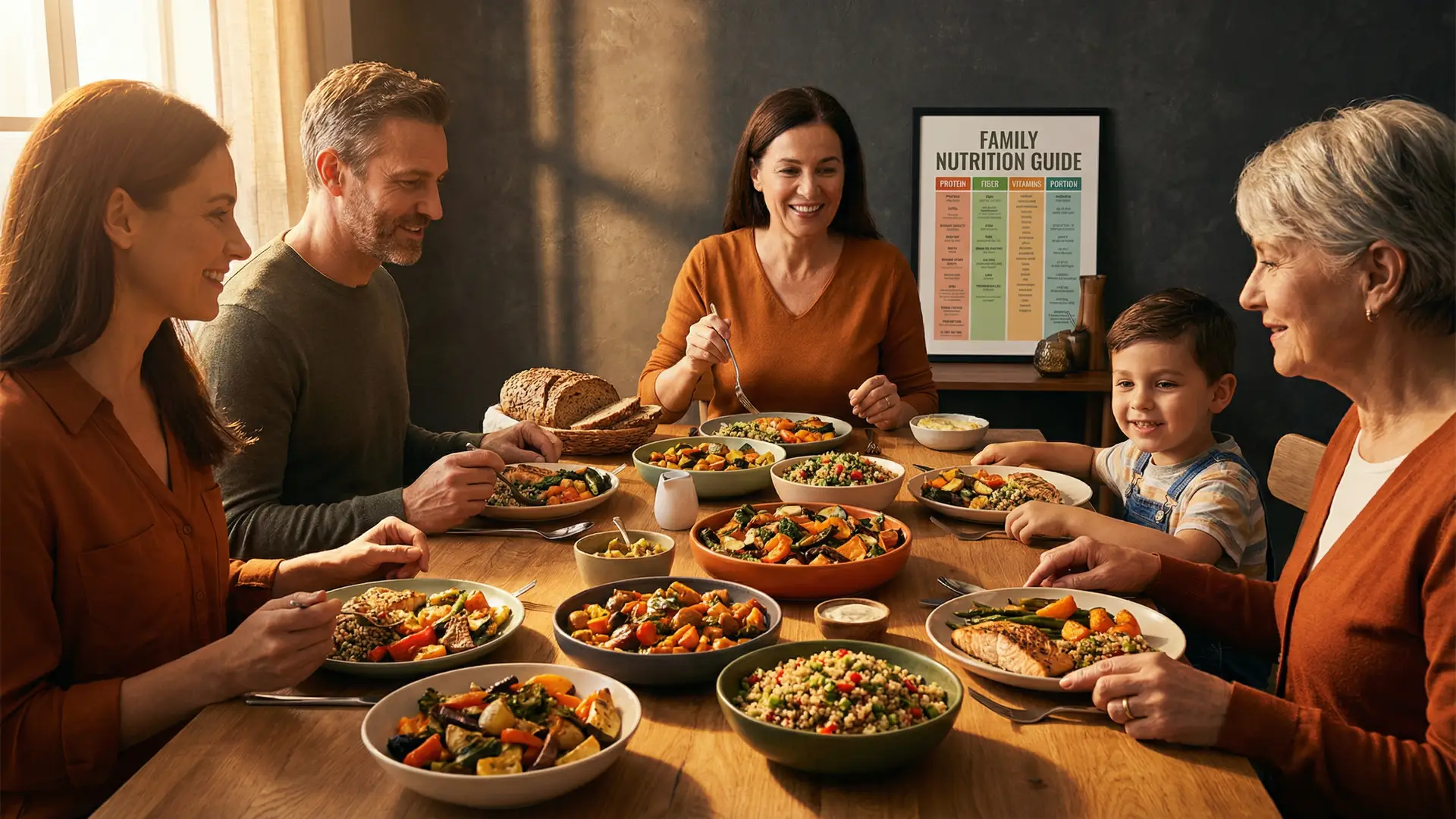
For families, the most useful nutritional metric is meal pattern — how often are you eating processed food? How often are you eating home-cooked meals? How often does dinner include a protein source, a vegetable, and a complex carbohydrate? These patterns, tracked over a week, are more predictive of family health outcomes than any per-meal calorie count.
What to Safely Ignore
Per-serving calorie counts on packaging: Serving sizes are standardised for adults and rarely reflect how much a child will eat. They are useful for comparing similar products; they are not useful for meal planning.
Precise daily calorie totals: The human body is not a calorimeter. Calorie absorption varies by food type, cooking method, gut microbiome, and individual metabolism. A 50-calorie difference between two meals is nutritionally meaningless for most families.
App-generated calorie warnings: Most consumer nutrition apps are calibrated for individual adults trying to lose weight. Their warning thresholds are not appropriate for growing children or active teenagers.
How FamilyPlate Handles Calories
FamilyPlate's nutrition tracking shows calorie ranges per meal as context — not as targets to hit precisely. The system uses per-member profiles to ensure that the overall weekly plan is nutritionally appropriate for each family member, without requiring parents to calculate calorie counts manually.
The focus is on the metrics that matter: protein per meal, vegetable portions per week, variety across food groups, and alignment with each family member's dietary needs. Calories are visible but not the primary signal — because for most families, they should not be.