
The hardest part of a weight loss meal plan is not the food itself. It is the fact that you still have to feed a family.
When one parent decides to change their diet to lose weight, the household dynamic immediately fractures. Suddenly, the standard family dinners — the pasta bakes, the homemade pizzas, the quick fish fingers and chips — no longer fit the parent's goals. But those meals are exactly what the children will actually eat.
The result is usually one of two unsustainable scenarios. Either the parent becomes a short-order cook, preparing a chicken salad for themselves and a separate meal for the kids, or the parent abandons their weight loss goals entirely because cooking two dinners every night is exhausting.
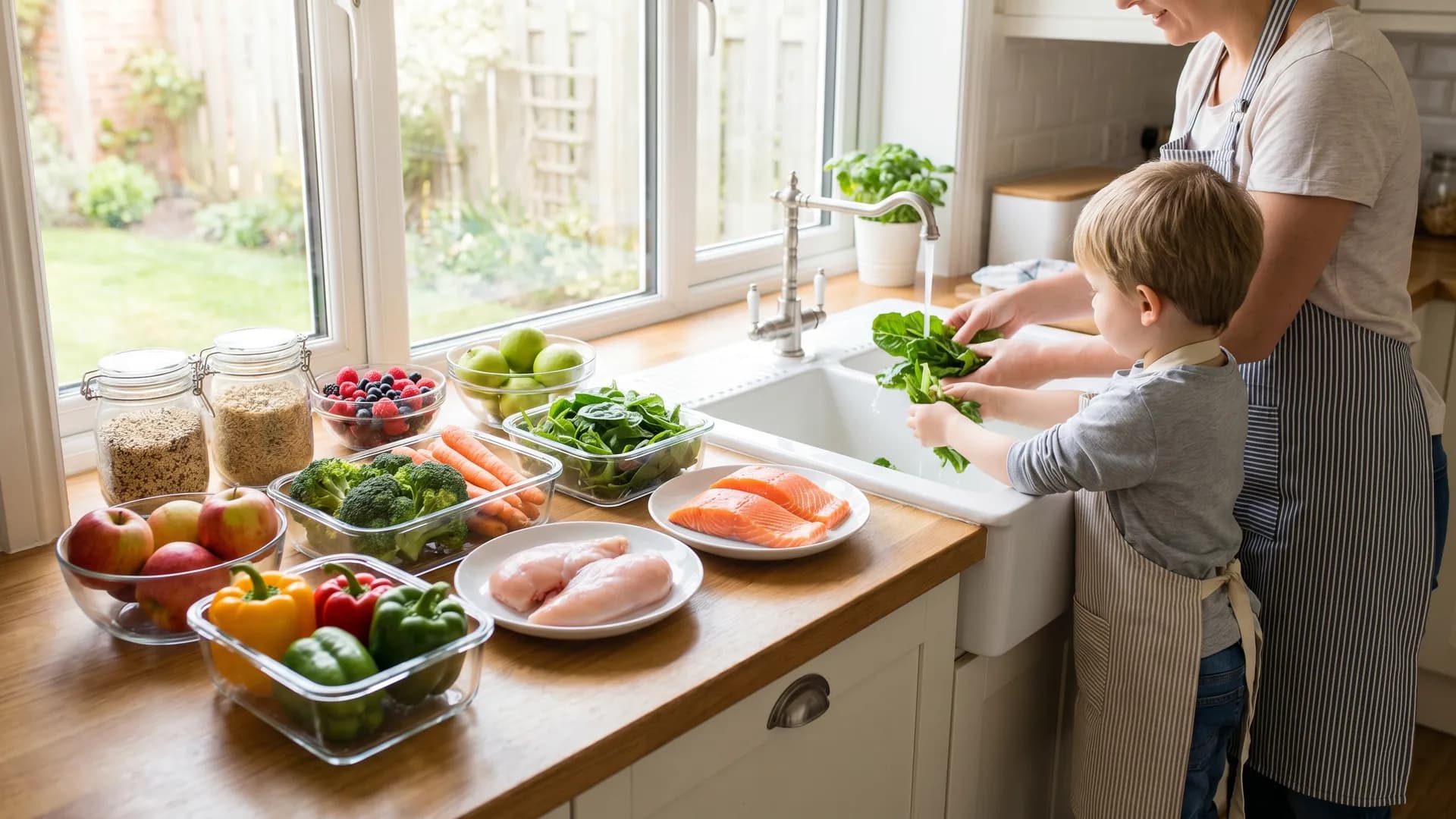
There is a third way. You can manage a weight loss meal plan while cooking for a family, without making separate meals. It requires a shift in how you structure your dinners and how you use technology to plan your week.
The “Deconstructed Dinner” Strategy
The secret to feeding a family while following a weight loss meal plan is the “deconstructed dinner.” Instead of cooking integrated meals where all the calories and macros are mixed together (like a lasagne or a casserole), you cook meals where the components are kept separate.
When components are separate, you can control your own portions and macronutrient ratios without changing what the children eat.
Taco Night
The Family Plate
Taco shells, seasoned beef, cheese, sour cream, and rice.
Your Weight Loss Plate
A large bowl of lettuce topped with the same seasoned beef, salsa, and a small sprinkle of cheese (a taco salad).
✓ You cooked one meal. Everyone is happy. You hit your calorie targets.
Burger Night
The Family Plate
Beef burgers on brioche buns with a side of oven chips.
Your Weight Loss Plate
A bunless beef burger served over a large side salad or roasted vegetables.
✓ One cooking process, two entirely different nutritional profiles.
Pasta Night
The Family Plate
Spaghetti bolognese with garlic bread.
Your Weight Loss Plate
The same bolognese sauce served over courgette noodles or a bed of spinach.
✓ The sauce is identical. The carbohydrate load is entirely different.
By keeping the protein, the carbohydrates, and the vegetables separate on the table, you empower yourself to build a plate that fits your weight loss goals, while allowing your children to build plates that provide the energy they need to grow.
Tracking Nutrition Without the Obsession
If you are following a weight loss meal plan, you need to know your numbers. You need to understand your calorie intake and your macronutrient split (protein, fats, carbohydrates).
Historically, this meant using a food diary app. You would cook the family dinner, weigh your specific portion of chicken, weigh your specific portion of rice, scan a barcode, and log it all into your phone while your food went cold. This is miserable, and it models an unhealthy relationship with food for your children.
This is where AI meal planning changes the game. When you use FamilyPlate to generate your weekly menu, the nutrition tracking is built directly into the plan. The AI calculates the calories and macros for every meal before you even step into the kitchen.
If your goal is to stay under 600 calories for dinner with at least 35g of protein, you simply set those parameters in the app. The AI will only suggest family-friendly meals that meet your criteria. You do not need to log your food at the table, because the meal was already mathematically verified during the planning phase on Sunday afternoon.
| Approach | When You Track | Stress Level |
|---|---|---|
| Food diary app | At the dinner table, after cooking | High — weighing, scanning, logging |
| AI meal planning | During Sunday planning session | Low — already calculated in the plan |
| No tracking | Never | Zero — but goals are not met |
The Protein Priority
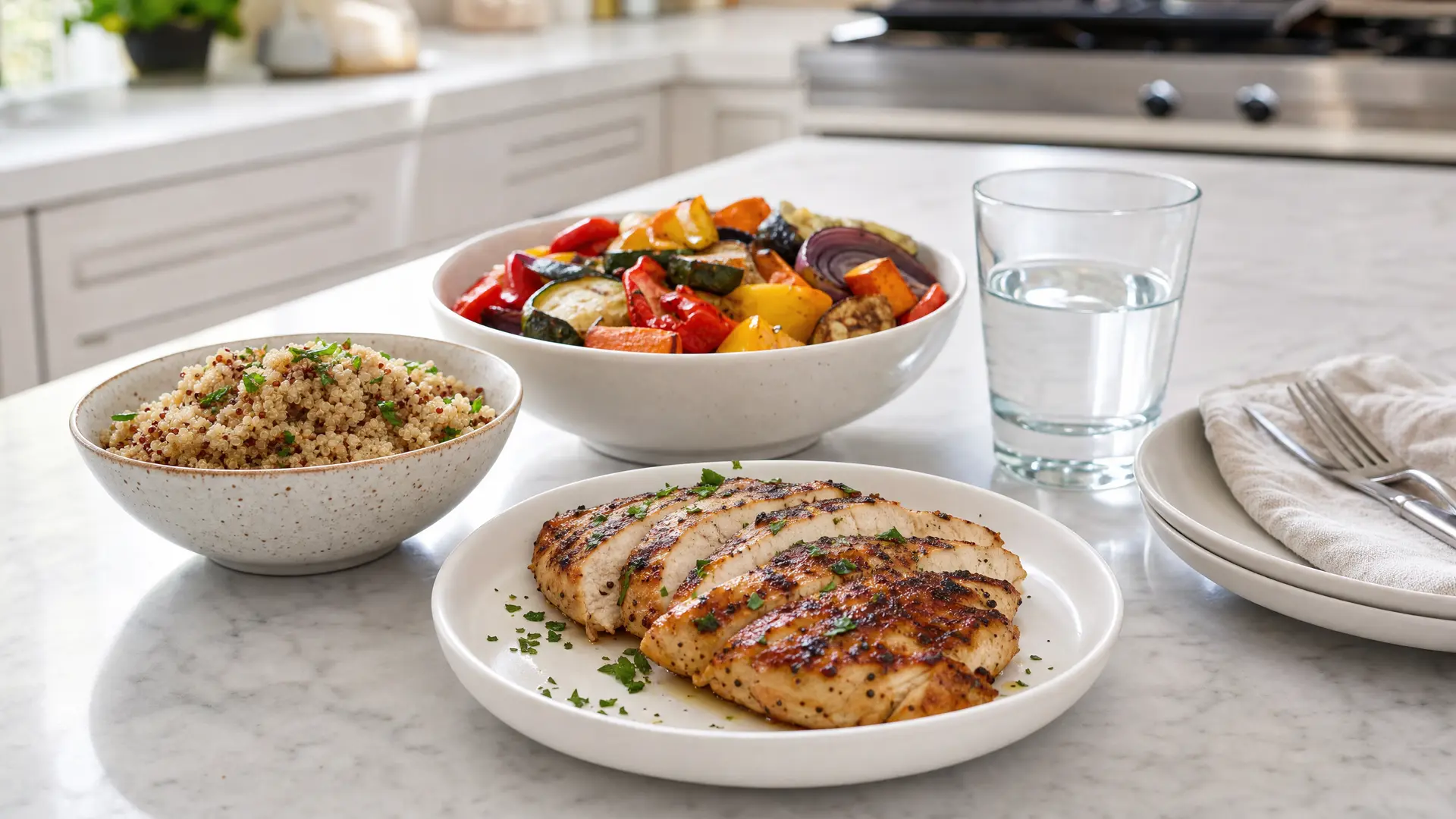
When managing a weight loss meal plan within a family context, protein is your greatest ally. Protein is highly satiating, meaning it keeps you full and prevents late-night snacking. It also preserves muscle mass during weight loss. Conveniently, protein is also essential for your children's growth and development.
The easiest way to align your weight loss goals with your family's needs is to build every dinner around a lean protein source.
Chicken Breast
165 kcal / 100g
31g protein
Universally accepted by children, excellent for weight loss.
White Fish
82 kcal / 100g
18g protein
Quick to cook, very low calorie, high protein.
Lean Mince
215 kcal / 100g
26g protein
Perfect for bolognese, tacos, and burgers.
If you secure the protein source, the rest of the meal is just a matter of portion control. You take a larger portion of the protein and the vegetables; the children take a standard portion of the protein and a larger portion of the carbohydrates.
Handling the Picky Eater Problem
The most common objection to this approach is: “My kids are picky. They will only eat pasta and chicken nuggets.”
If you are trying to lose weight, you cannot survive on leftover chicken nuggets. But you also cannot force a picky eater to suddenly embrace grilled salmon and quinoa.
The solution is the Anchor Food method. Every meal must contain at least one “anchor food” that you know the picky eater will accept. If you are making a healthy chicken stir-fry, the anchor food might be plain noodles or plain rice served on the side. The child eats the noodles and perhaps tries a piece of chicken. You eat the chicken and the vegetables, skipping the noodles.
FamilyPlate's Taste Profile feature manages this automatically. The AI learns which ingredients your children refuse to eat and which ones they love. It then generates meal plans that respect your nutritional targets while ensuring there is always an acceptable anchor food for the kids.
A Sample Weight Loss Week for a Family
Deconstructed Chicken Tacos
25 min
480 kcal
720 kcal
Baked Salmon with Roasted Veg
20 min
420 kcal
580 kcal (with rice)
Lean Beef Bolognese
30 min
390 kcal
650 kcal (with pasta)
Chicken Stir-Fry
20 min
410 kcal
600 kcal (with noodles)
Bunless Burgers & Salad
25 min
450 kcal
700 kcal (with bun & chips)
Your calories (left) vs. family calories (right). One meal, two portion strategies.
Stop Cooking Two Dinners
You do not have to choose between your health goals and your family's happiness. Cooking two separate dinners is a fast track to burnout, and abandoning your weight loss meal plan is a disservice to yourself.
By shifting to deconstructed meals, prioritising protein, and using an AI meal planner to handle the nutritional maths upfront, you can feed your family and hit your goals simultaneously.
The key is to stop tracking food at the dinner table, and start tracking it at the planning stage. When the plan is right, the execution is easy. FamilyPlate's nutrition tracking is built for exactly this scenario — one plan, one shopping list, one dinner, and a calorie target that is already met before you turn on the hob.