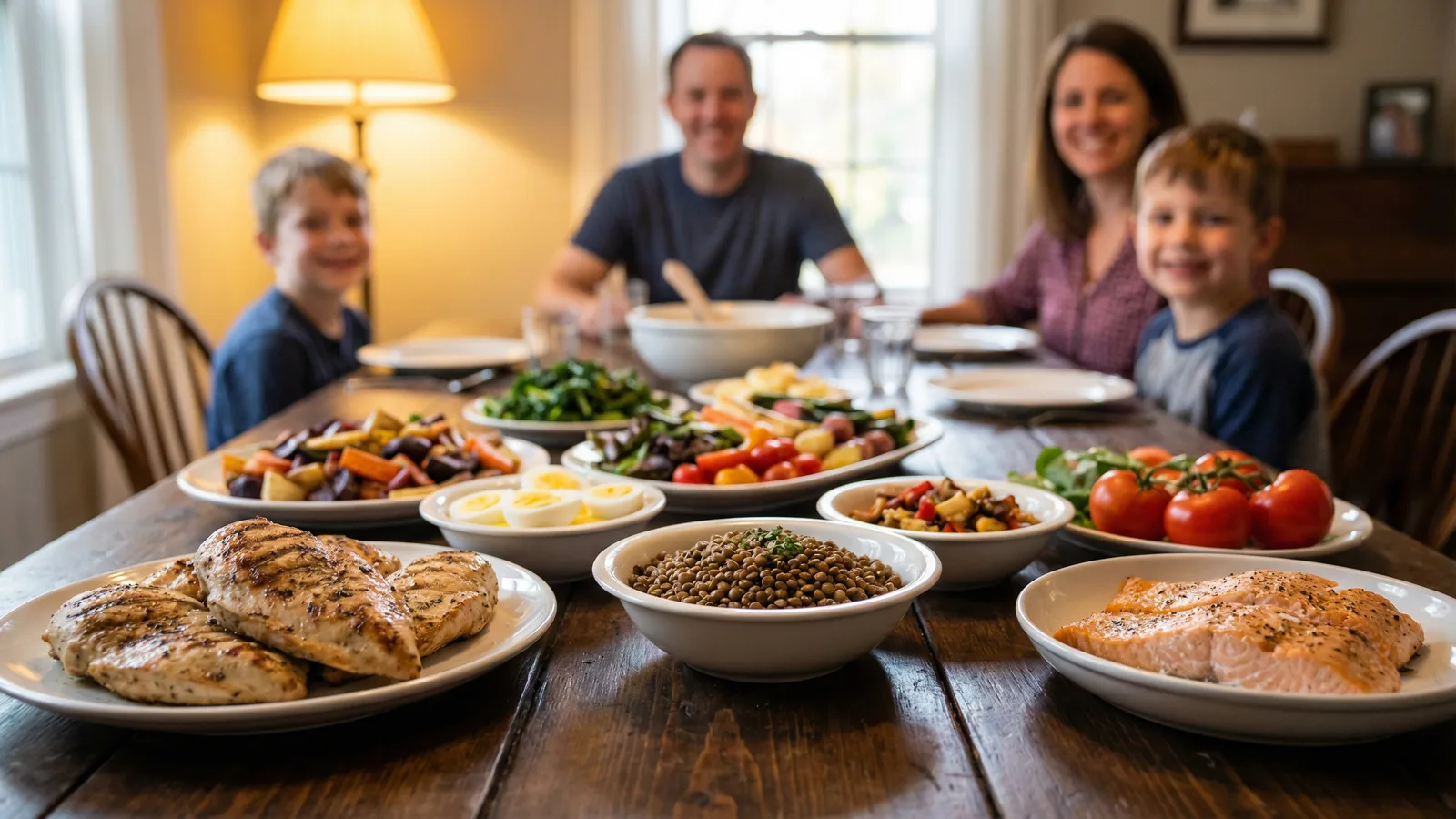

Why Protein Matters More for Children Than Adults
Adults need protein primarily for maintenance — repairing tissue, supporting immune function, and sustaining muscle mass. Children need protein for all of that, plus active growth. Every centimetre of height gain, every gram of new muscle, every new immune cell requires protein as its raw material.
The WHO recommends 0.83g of protein per kilogram of body weight per day for adults. For children, the recommendation is higher on a per-kilogram basis — ranging from 1.0g/kg for older children to 1.5g/kg for infants and toddlers — because growth demands more protein relative to body weight than maintenance does.
In practical terms, this means a 25kg child (roughly age 7–8) needs approximately 25–30g of protein per day. A 45kg child (roughly age 12–13) needs approximately 45–55g. These are not large amounts — but they need to be distributed across meals in a form the child will actually eat.
Weekly Protein Targets by Age
| Age Group | Approx. Weight | Daily Target | Weekly Total |
|---|---|---|---|
| Age 4–6 | 16–22 kg | 16–22g | 112–154g |
| Age 7–10 | 22–32 kg | 22–32g | 154–224g |
| Age 11–13 | 35–50 kg | 35–55g | 245–385g |
| Age 14–17 (girl) | 50–60 kg | 46–55g | 322–385g |
| Age 14–17 (boy) | 55–70 kg | 52–70g | 364–490g |
The Best Protein Sources for Children
The best protein sources for children are those that combine high protein content with formats children will actually eat. Nutritional completeness matters, but palatability is the constraint that determines whether the protein actually gets consumed.
Animal proteins (complete amino acid profiles)
Chicken, turkey, eggs, fish, and dairy (cheese, yoghurt, milk) provide complete proteins — all nine essential amino acids in sufficient quantities. These are the most efficient protein sources for children because the amino acid profile closely matches what the body needs for growth.
Eggs are particularly valuable because they are universally accepted by children, cheap, fast to cook, and provide approximately 6g of protein per egg. A two-egg breakfast or lunch provides 12g of protein — nearly half a young child's daily target in a single meal.
Plant proteins (incomplete but combinable)
Lentils, chickpeas, black beans, tofu, and edamame are excellent protein sources for children who do not eat meat, or for families reducing meat consumption. Plant proteins are typically incomplete — they lack one or more essential amino acids — but combining different plant proteins across the day (rice and beans, hummus and bread, lentils and yoghurt) provides a complete amino acid profile.
Practical Protein Distribution Across the Week
Rather than trying to hit a precise daily target, a more practical approach is to ensure that every dinner includes a meaningful protein source, and that protein sources rotate across the week to provide variety in amino acid profiles and micronutrients.
Chicken thighs
Baked or stir-fried
28–35g per serving
Lentil dal
Pair with yoghurt for complete protein
18–22g per serving
Eggs (frittata)
Fast, cheap, universally accepted
12–18g per serving
Salmon
Also provides omega-3 fatty acids
30–38g per serving
Turkey meatballs
Kid-friendly format
25–32g per serving
Beef stir-fry
Higher iron content than chicken
30–40g per serving
Chickpea curry
Pair with rice and yoghurt
15–20g per serving
Signs Your Child May Not Be Getting Enough Protein
Protein deficiency in children in developed countries is rare — but inadequate protein intake is more common than outright deficiency, particularly in families with picky eaters or those following restrictive diets without professional guidance.
Signs that may indicate inadequate protein intake include: slow growth relative to peers, frequent illness (protein is essential for immune function), poor wound healing, persistent fatigue, and difficulty concentrating at school. These symptoms have many possible causes — protein intake is one factor among many, and a doctor should be consulted if you have concerns.
How FamilyPlate Tracks Protein for Children
FamilyPlate's nutrition tracking allows you to set per-member protein targets based on age and weight. When the AI generates a weekly meal plan, it filters meal suggestions to ensure the protein targets for each family member are met across the week — not just on individual days.
The system also tracks protein source variety — flagging if the week's plan relies too heavily on a single protein source, and suggesting alternatives that provide a more complete amino acid profile. The weekly meal plan becomes a nutritional framework, not just a dinner schedule.